
| Animal | Canine |
| Sample type | Serum,Plasma |
| Sample volume | 75μL |
| 39-86 °F storage | 24 months shelf life |

 Animal Canine
 Sample Type Plasma, Serum
 Measurement Range 10-1000 μg/L
  Testing Time 15 Minutes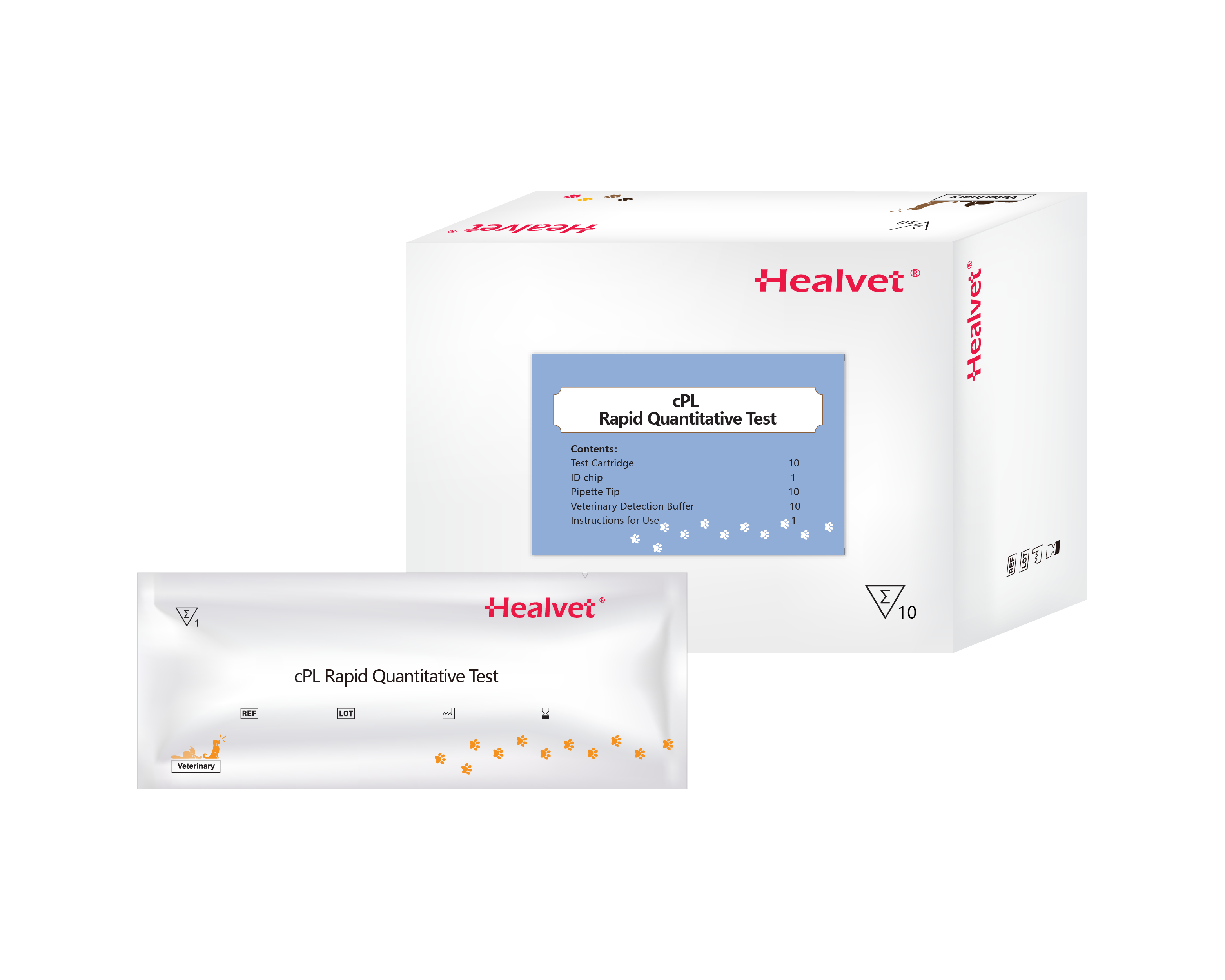
Lipase is mainly secreted by the pancreas and appears late in serum and lasts for a long time. Inacute pancreatitis, the damage of the pancreatic acinus leads to the release of a large amount oflipase stored in the acinus, the permeability of the lymphatic vessels and capillaries of thepancreas increases, and a large amount of pancreatic lipase enters the blood, which increases theserum lipase. Therefore, serum lipase content is an important indicator for the diagnosis ofpancreatitis. In addition, somekidney diseases, peritonitis, intestinal obstruction and other diseases and drugs such as corticosteroids can also lead to elevated lipase.
| Animal | Canine |
| Sample type | Serum,Plasma |
| Sample volume | 75μL |
| 39-86 °F storage | 24 months shelf life |
| Normal(Low risk) | <200 μg/L |
| High risk | 200-400 μg/L |
| Pancreatitis likely | >400 μg/L |
cPL Rapid Quantitative Test is a fluorescence immunoassay used along with iRapid-1 analyzer for quantitative determination of cPL concentration in canine serum or plasma specimen. The test is used as an aid to canine pancreatitis
Step 1: Sample Preparation
Add 75 µL of serum or plasma sample into the buffer tube.
Mix thoroughly without forming bubbles.
Step 2: Sample Application
Transfer 75 µL of the prepared mixture into the sample well of the test card.
Step 3: Result Analysis
Insert the test card into the Healvet 3000 Analyzer with standard test mode.
Read and record the test result according to the analyzer instructions.